

Article: The Weight of Silver
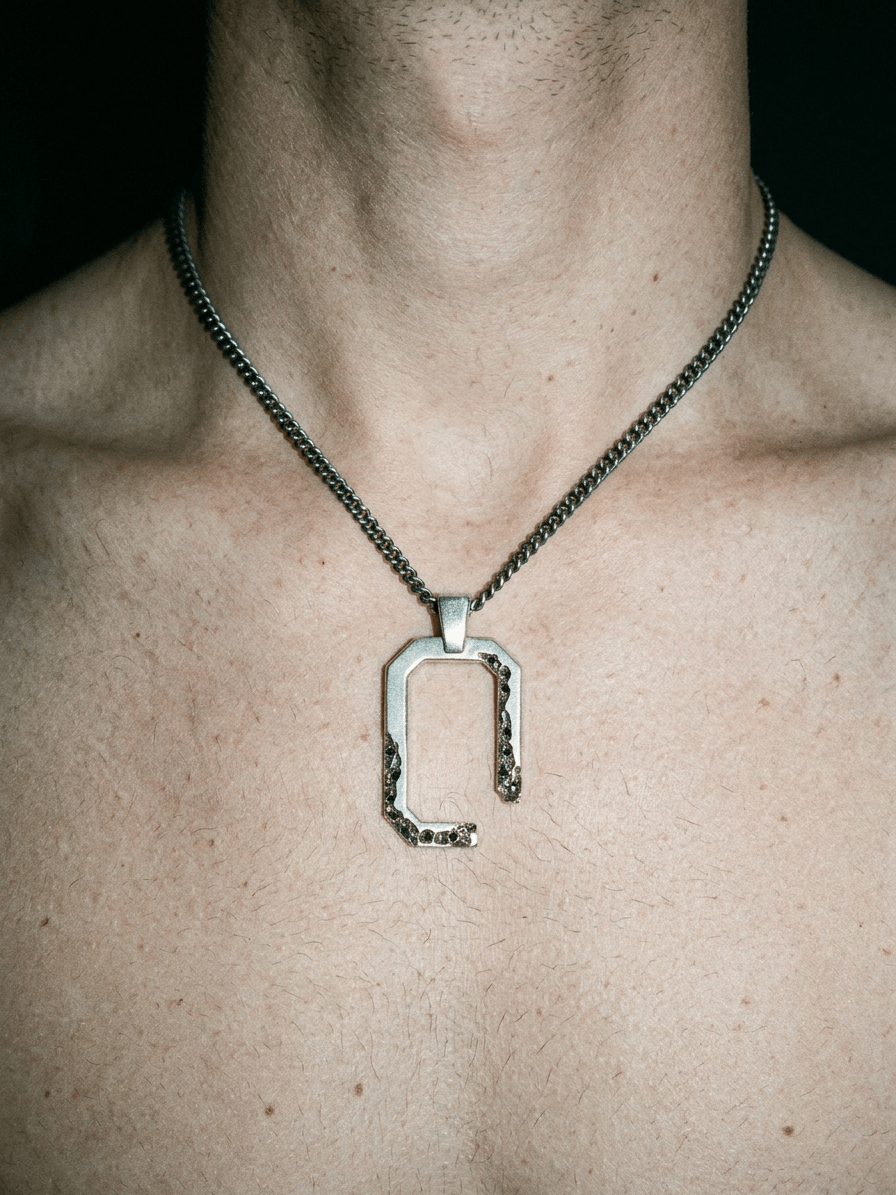
The Weight of Silver
Silver does not announce itself. It sits at the collar or rests at the wrist and waits. It darkens in certain lights, catches in others. This is not a flaw. This is the point.
GOTI has been working in reclaimed silver from Tuscany for over two decades. The pieces they make — pendants cast from found forms, bands shaped without flourish, bracelets that weigh exactly as much as they should — are not designed to match anything. They exist the way a scar exists. Placed, but not planned.
The chain rests at the sternum. The pendant — a bar, a cylinder, a weight — pulls it down. You forget it's there. Then you look in a mirror and it's the first thing you see.
AITO works differently. The silver is intentional from the start — geometric, structural, cut with angles that hold light without releasing it. The stones, when they appear, are black. Not to mourn anything. To resist ornament for ornament's sake. A scattered diamond band is still a band. The stones are there to disrupt the surface, not decorate it.
There is a particular quality to jewelry that does not try to impress. It touches skin and stays. It moves when you move. At some point it stops being something you wear and starts being something you have — the way a callus is something you have, or a particular way of standing. The GOTI pieces do this. The AITO pieces do this. They do not ask to be noticed. They are simply there.
The images in this journal were made in closed rooms, with flash, on cheap film. The jewelry was photographed as found objects first, body objects second — because that is the order in which you will encounter them. You see it. Then you put it on.

