

The Particular Darkness of Silver That Was Told It Doesn't Need to Shine
Dispatch
On the particular darkness of silver that has been told it doesn't need to shine.
There is a workshop in Arezzo where silver is made to forget itself.
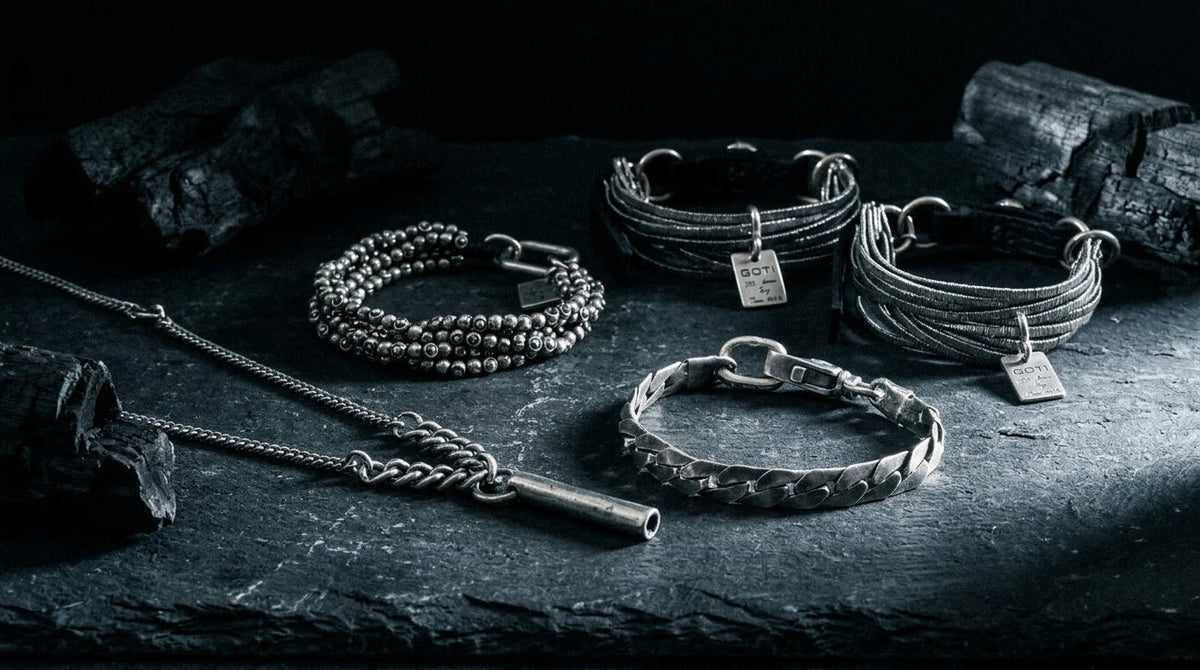
Not destroyed — redirected. Stripped of the expectation that metal must gleam, must catch light, must perform the tired theater of preciousness. In this workshop, sterling silver is submerged in chemical baths that rewrite its surface. What emerges is not damaged. It is translated. From the language of display into the language of time.
Riccardo Goti has been performing this translation since the turn of the millennium. His practice — we might call it jewelry, though the word feels insufficient — operates on the premise that an object's value is not diminished by the evidence of process. That a chain link bearing the slight irregularity of the hand that formed it is more honest, and therefore more interesting, than one stamped into perfection by a machine.
The Etruscans understood this. They worked metal in this same Tuscan soil three thousand years ago, and their jewelry survived not despite its handmade imperfections but because of them — because irregularity is what the human eye reads as intention, as presence, as proof that something was cared about enough to be touched.
GOTI inherits this understanding without romanticizing it. The bracelets are heavy. The rings are blunt. The necklaces hang with the weight of actual silver, not plated implication. Leather — black, horse-brown, deliberately unpolished — is braided through chain links as if the animal and the mineral agreed to spend a lifetime together on someone's wrist.
What interests me about this work is its refusal of narrative completion. A GOTI piece doesn't arrive "finished" in the way that implies nothing further will happen to it. It arrives at a particular point in its oxidation, a particular shade of dark — and then it continues. Wear changes it. Body chemistry changes it. Time changes it. The ring you buy is not the ring you'll wear in five years. It is the same object having a different conversation with the air.
There is courage in this. In an industry that sells permanence — that diamond is forever, that gold does not tarnish, that value means resistance to change — GOTI sells transformation. The promise is not that this object will stay the same. The promise is that it will age as honestly as you do.
Silver that has been told it doesn't need to shine finds its own kind of light. It's the light of worn things, used things, touched things. The light that lives in the crease of an old leather jacket. In the patina on a stone step that ten thousand feet have crossed. In the particular grey that gathers on surfaces the world has not forgotten to press against.
From Arezzo, with intention. And time.